Why AI Opens a Third Way Between Standard Software and Custom Development
For many years, the decision for enterprise software was relatively simple: buy, develop in-house, or obtain as Software as a Service.
SaaS often won this decision. Companies did not have to build their own infrastructure, received regular updates, and could introduce new features more quickly. Especially for standardizable tasks, this was a significant advancement.
However, the model reaches its limits where software deeply integrates into the company’s value creation. The more an application bundles business-critical knowledge, individual processes, or industrial data, the greater the question of dependency on the provider becomes.
At the same time, generative Artificial Intelligence is changing software development. Small teams can now create prototypes faster, connect existing systems, and develop individual features. This significantly lowers the barrier for custom developments.
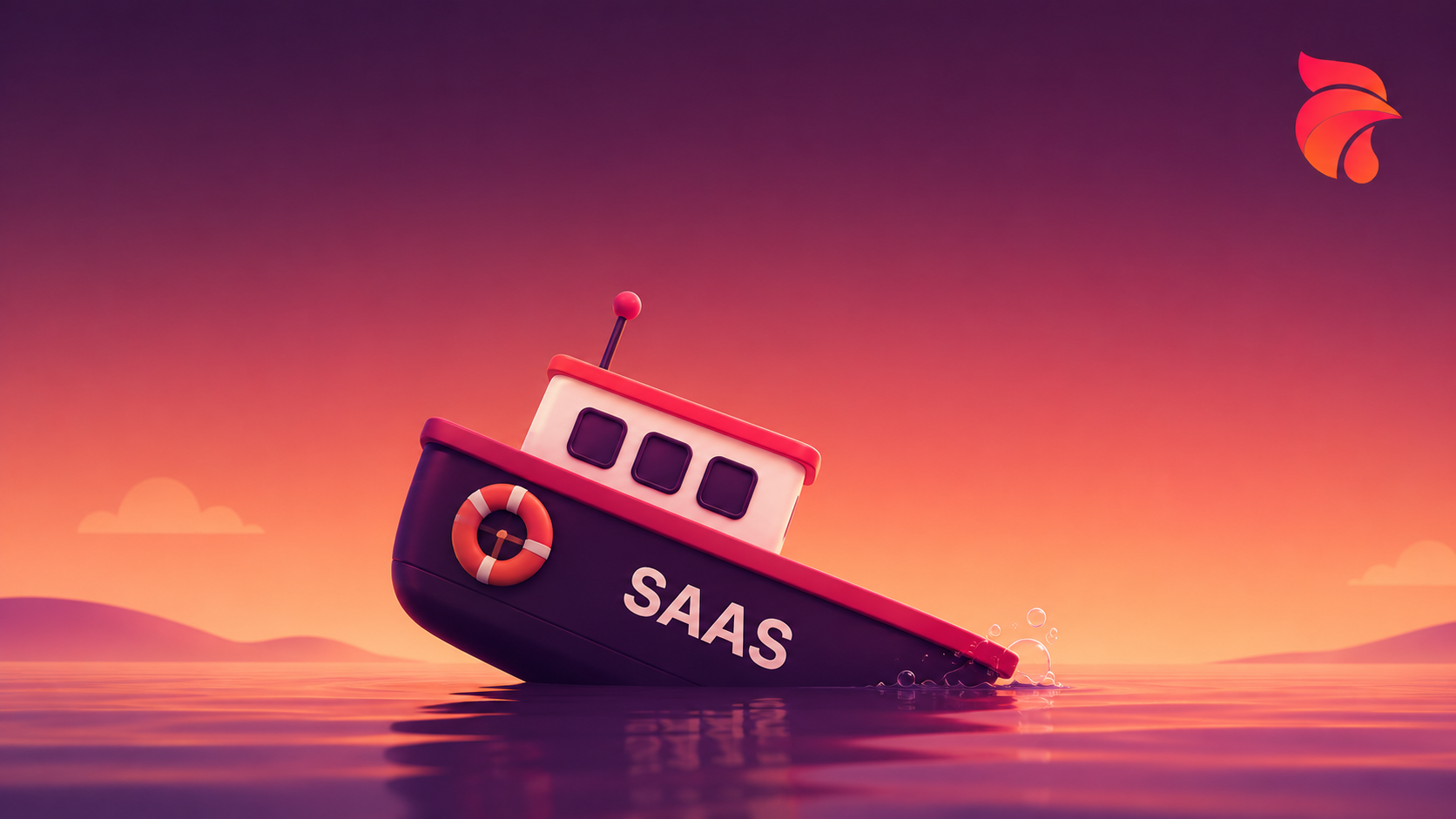
This does not mark the complete end of SaaS.
It marks the end of SaaS as an unavoidable standard model.
What Current Custom Developments Actually Show
A much-discussed example is provided by the US health insurer Curative. According to the company, an existing CRM contract was terminated, and a custom application was developed in a short time. The case is often interpreted as evidence that AI makes traditional enterprise software obsolete.
This conclusion is too short-sighted.
The case mainly shows two things:
- AI-supported development reduces the effort to create custom software.
- The long-term operation of a custom application remains demanding.
Code is only part of a productive system. Companies still need a viable data model, roles and permissions, documented interfaces, monitoring, security updates, tests, and clear responsibility for further development.
An application can be created in a few weeks. The operational responsibility remains for years.
This is precisely why the new development does not automatically lead back to full custom development.
The Real Problem is Not SaaS
Companies will continue to obtain many applications as a service in the future. For video conferencing, scheduling, travel expenses, or other standardized tasks, this makes sense in many cases.
SaaS becomes critical where an application:
- stores business-critical knowledge,
- permanently dictates central processes,
- processes production, customer, or asset data,
- limits individual development,
- or makes switching providers practically impossible.
The problem is not the cloud. It is the lack of freedom of action.
A company can formally export its data and still remain dependent. A CSV file contains records but often lacks histories, relationships, permissions, and professional contexts. Even documented interfaces help only to a limited extent if changes are only possible by the manufacturer.
The crucial question is therefore no longer just:
Buy or develop in-house?
But:
Which solution allows a quick start while maintaining our long-term freedom of action?
AI Shifts the Build-or-Buy Decision
The classic build-or-buy decision was based on a clear assumption: Custom software is expensive, slow, and risky. Standard software is faster and more economical.
This assumption remains partly true. But it no longer applies with the same absoluteness.
AI-supported development tools can now:
- translate requirements into initial data models,
- generate user interfaces,
- implement interfaces,
- prepare tests,
- create documentation,
- and combine existing components more quickly.
This makes custom development more accessible. Departments can participate earlier in the design because requirements no longer have to be formulated exclusively in technical specifications.
Nevertheless, AI does not replace a reliable architecture. It accelerates implementation but not automatically responsibility.
The new question is therefore not whether AI replaces software providers. The more interesting question is what role software providers will take on in the future.
The Third Way Between Standard Software and Custom Development
Between classic SaaS and full custom build, a third model emerges: Co-creation on a reliable platform.
The platform provides reusable technical foundations, such as:
- identity and rights management,
- data models and interfaces,
- document and knowledge management,
- process automation,
- AI assistants,
- logging and monitoring,
- as well as defined extension points.
The company brings in its processes, expertise, and specific goals. Together, an application is created that does not start from scratch but also does not remain entirely within the boundaries of a standard product.
This model combines two previously opposing advantages:
- the speed of an existing platform,
- and the individuality of a custom solution.
The provider thus becomes less of a seller of a finished function catalog. They become an operator, architect, and development partner.
Why Industrial Companies are Particularly Affected
In industrial companies, software is rarely isolated. A new application must work with ERP systems, maintenance solutions, machine controls, documents, sensor values, and established data structures.
At the same time, a large part of operational knowledge is not in structured databases. It lies in maintenance reports, shift books, emails, meeting notes, and the minds of experienced employees.
Another isolated application does not solve this problem. It can even exacerbate it.
Therefore, the next generation of industrial software must do more than provide individual functions. It must bring together information from various sources, put knowledge into a comprehensible context, and complement existing systems rather than simply replace them.
At Hahn PRO, we are developing this approach from maintenance. ADAM remains focused on knowledge-intensive industrial processes: equipment, disruptions, service, production, and technical work.
The platform should not unnecessarily displace existing systems. It should start where information is missing, knowledge is lost, and employees have to mediate between systems.
SaaS Does Not Disappear. But Its Role Changes
The SaaS model remains sensible for many applications. What changes is its claim to exclusivity.
Companies will differentiate more precisely:
- Which processes are standardizable?
- Which processes contain proprietary know-how?
- Which data is strategically relevant?
- Where do departments need real design possibilities?
- Which dependencies are acceptable?
The winners of this development will not necessarily be the platforms with the most functions.
Successful solutions will be those that combine speed and sovereignty:
- immediately usable, but not rigid,
- professionally operated, but not irreplaceable,
- standardized, but expandable,
- AI-supported, but controllable,
- jointly developed, but clearly accountable.
This is not a complete farewell to SaaS.
It is the transition from finished software to adaptable, jointly developed platforms.
What Questions Companies Should Ask Now
Companies do not have to question every existing system. But they should examine business-critical applications to see how much freedom of action actually remains.
A sensible starting point is a clearly defined process:
- Where does manual duplicate work occur today?
- Which information is regularly missing?
- Which knowledge is tied to individual people?
- Which further development fails due to rigid system boundaries?
- Which integration causes ongoing effort?
In such places, it becomes clear whether a standard product suffices, a custom development is sensible, or a platform-based co-creation approach offers the better path.
Not every software has to become individual. But strategically important processes should be able to evolve without a company losing its control.
This may not be the end of SaaS.
But it is the end of SaaS as we have known it so far.